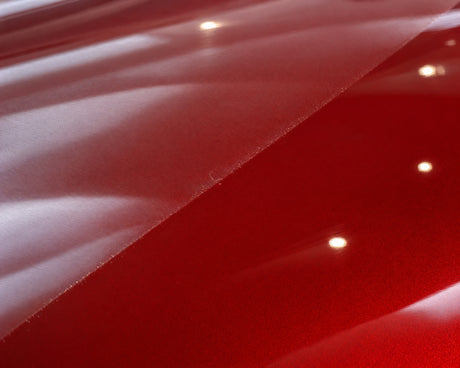




Dull paint shines again if the clear coat still has life in it
The bonnet and roof look grey, the paint gleams for a moment after a wash and goes flat again as soon as it's dry. Then comes the question we regularly get in support: can I polish that out? Often, yes. On the wrong paint, though, the same bottle strips material that never comes back, or leaves factory matte paint permanently blotchy.
Restoring dull paint means taking off the weathered top layer and protecting the surface again. That works on dull clear coat and old single-stage paint. Factory matte paint must never be polished, and peeling clear coat is a job for a paint shop. Two quick tests tell you beforehand which case you're dealing with.
Not every matte-looking paint can take a polish
Gloss paint that has gone dull can be polished, factory matte paint and peeling clear coat can't, and you need to make that call before you pick up a bottle. On dull gloss paint, the top layer has weathered. Sun and frost attack it, light scatters instead of bouncing straight back, and the paint loses its depth. Underneath there's usually still sound material, and polish brings it back to the surface. Plain wash scratches can give the same impression, in which case the grey haze sits only in the surface.
Old single-stage paint is the special case with the biggest payoff. It has no separate clear coat, so colour and protection sit in one single layer. Reds and yellows especially fade, turn pink or grey and often carry a chalky film. Here you're polishing the colour layer itself. That's why the cloth picks up colour, and why the result often looks like a fresh respray. So colour on the cloth is no alarm here, it's proof the weathered layer is coming off.
Factory matte paint is the opposite. A matting agent in the clear coat makes the surface deliberately, finely rough. Polish cuts that texture smooth, leaving shiny patches that, according to ADAC, can't be removed with the usual methods. Polestar spells out the polishing ban in its owner's manual. How to treat this kind of paint properly is covered in our article on washing and caring for matte paint and matte wrap.
The fourth case is the most serious. First you see dull patches on the roof and bonnet, then a milky haze, and finally white, scaly areas where the clear coat flakes off at the edges. Polish only removes material, it doesn't fill anything. On surfaces like these the sponge is more likely to tear the loose edges further open, and that panel belongs with a paint shop.
Why the wrong polishing costs you clear coat
Clear coat doesn't grow back, and of the typical 30 to 60 microns you can only use up about eight over the car's entire life. We run the numbers in our article How often can you polish a car. Underneath sits the base coat at just 10 to 30 microns, with no gloss of its own and no protection. Once that's exposed, no bottle can save you.
Now for the numbers hardly anyone puts side by side. Auto Motor und Sport describes an oxide layer of 6 to 8 microns on a 1981 S-Class. SONAX quotes a maximum of 0.3 microns per application for intensive polishing by hand. On paper, a layer like that takes you at least 20 passes. On clear coat, that would eat almost your entire budget. It's a back-of-the-envelope sum based on an extreme case, but it shows you the order of magnitude.
That's why paint types behave so differently. The paint on that S-Class was about 120 microns thick and built without a protective clear coat, so it can take that much removal. Clear coat with light weathering, on the other hand, often needs very little, because the damage only affects the top few microns. If it has already gone badly grey, measure first or have it measured before any coarse polish goes anywhere near the paint. With single-stage paint, what matters more is staying even and going easy on the edges.
Then there's the timing. After polishing, the surface sits exposed without its old protection, and in winter it gets hit by road salt and wet. If you polish up dull paint and head into the cold season unprotected, you'll watch the gloss fade again fast. So polishing and protecting belong on the same day. That's exactly what makes the next dry working day before the first salt so valuable. Spray sealants also stand up to salt much better than wax.

Water and a cloth show what's on your car
Two tests are enough for a first read: water shows you the condition of the surface, and a white cloth with a bit of polish shows you the paint type. Both take just a few minutes and cost you next to no paint. Wash the car thoroughly first and let it dry, so you don't mistake dirt for weathering and no grit ends up under the cloth. Run both tests in more than one spot, because roofs and bonnets age faster than doors.
For the water test, pour a little water over the dull spot. For a moment it fills the roughened surface, and light bounces straight back again. If gloss and colour depth return while it's wet, the layer can generally be polished. If the area stays milky, or you can see cracks and flakes through the water film, leave the polish out of it and show the panel to a paint shop.
For the cloth test, put a pea-sized amount of mild polish on a clean white microfibre cloth and rub an inconspicuous spot with light pressure. Grey or brownish marks are dirt and weathered material. If the cloth instantly takes on the car's colour, you're usually looking at single-stage paint on a solid-colour car. Metallic paint, on the other hand, has a clear coat, so colour on the cloth there means stop immediately.
If you want to know more precisely, grab a paint thickness gauge. Factory paint usually sits at 100 to 140 microns. Readings well below that suggest earlier correction work has already used up a lot, and then anything coarse stays on the shelf. The gauge shows total thickness, not the clear coat alone. Even so, the reading is often enough to decide on the first step. Measure each panel at several points.
Clay first, then test a small area, then carry on
After the wash comes the clay, then a taped-off test spot of 30 by 30 centimetres, and only if that convinces you do you carry on polishing. With the Koch-Chemie Reinigungsknete "Rkb" Mild "Blau" Clay Bar and plenty of lubricant, glide over the paint in straight lines with no pressure. It picks up bonded dirt you'd otherwise polish in. When it gets dirty, fold it in half rather than using both sides, then check with your hand that the surface is smooth.
Tape off the test spot, along with rubber, plastics and sharp edges. For polishing a car by hand, the Koch-Chemie "Puck" Hand Polishing Sponge Applicator at 77 by 47 millimetres does the job, because it lets you build up pressure well. Put a small amount of SONAX XTREME Polish+Wax 3 Polish on it, work in a cross pattern with medium pressure and take off the residue before anything dries on. A household sponge soaks up too much polish.
Now peel off the tape. The hard line between treated and untreated paint tells you honestly what this combination can do. As a check, spray an alcohol-based panel wipe (degreaser) onto a cloth and wipe the area, because polishing oils hide fine marks. If the effect isn't there yet, do a second pass. If little changes after that, your hand has hit its limit and it's time for the machine.
If the test spot shows results, work your way on section by section. SONAX suggests, for example, a quarter of the bonnet at a time. Allow plenty of time: even by machine, beginners should reckon on 4 to 8 hours for a mid-size car, and restoring paint by hand takes longer. In return the method is forgiving, because you take off little per pass and can stop at any time.

These mistakes turn paint correction into paint damage
The most expensive mistakes when restoring paint are burned-through edges, panels that are too cold and polish that only fills. Reaching for the strongest bottle is understandable, because you see progress right away. And honestly, not everything can be saved: by hand you won't get rid of deep scratches on hard clear coat, and with heavy oxidation any hand polish eventually hits its limit.
Paint is thinner on edges and body lines. In a car care forum, one user describes how he rubbed through to the primer over five centimetres on the tailgate of his Mazda MX-5. So tape these areas off and don't polish them. That also protects rubber and textured plastics, where dried polish otherwise stays behind as a white haze that's a pain to get off.
Cold is the mistake of this time of year. Ideally you polish at 15 to 25 degrees. Below about 10 degrees, polish turns stiff, smears and dusts, and on cold metal it doesn't dry properly. This week it stays dry from Tuesday, at just 7 to 9 degrees. Saturday is the best fit, if you put the car in a garage first and let the metal warm up.
The third mistake sits on the shelf. Some polishes contain mostly silicone oils and fillers. They settle into the rough surface and the paint shines until the first few drives in the rain wash it bare again. A true abrasive polish, by contrast, actually removes the weathered layer. You check that on the test spot with the panel wipe. If the area still shines afterwards, you've exposed paint rather than laid down a film.
Your starter setup for the first dull paint you tackle
To get started by hand, all you need is clay, a Puck, a polish for weathered paint and a spray sealant for afterwards. You'll find further stages in our range of Polishes. Your test result decides where you start, not the strongest bottle, because every micron you save stays with you for the years ahead. Tape for the test spot and edges and a clean microfibre cloth round it out.
SONAX says its XTREME Polish+Wax 3 Polish is made for dull, weathered and neglected paint, and gives it a cutting power of 5. It seals in the same step, and the 500 millilitre bottle covers plenty of sections. The SONAX XTREME Ceramic Polish "All-in-One" Polish sits at cutting power 6, corrects light to medium paint defects and leaves a hydrophobic protective layer. By hand, a pea-sized amount does a DIN A4-sized area. With heavy oxidation, you work in several stages.
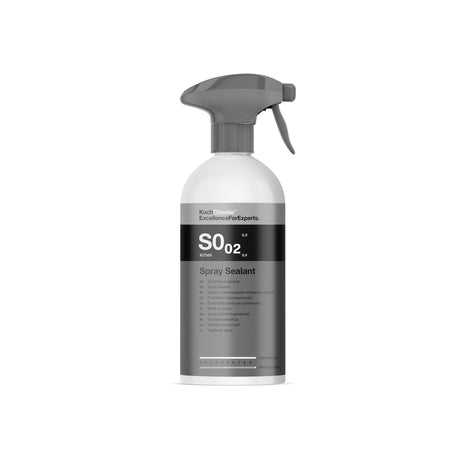
Both bring protection with them, and for winter you lay another layer on top. The Koch-Chemie Spray Sealant "S0.02" Spray Sealant builds strong beading with little effort and makes washing off salt and grime easier. Spray it on thinly and take it off with a fresh microfibre cloth. SONAX advises renewing a hand-applied protection after 6 to 8 washes at the latest and at least twice a year.
If your test spot shows too little by hand, that's no failure, it's a measurement. Hard clear coat and heavy weathering need machine speed, and you'll find the right machines and pads under polishing. One pass with a dual-action polisher and a medium polish takes off 1 to 3 microns, many times what hand work does. All the more reason to know your paint type first. Until then, working by hand remains the safe way in.

Detailing1-Insight: What we see day to day: if you don't know your paint thickness, work your way up slowly. One customer needed 6 passes with a coarse abrasive polish on badly weathered paint and deliberately skipped wet sanding because he didn't know the paint thickness. Never polish dull clear coat blind with the strongest bottle. Start with water, because the water test costs you zero microns.
No time for the whole post? Get it summarized:
Add Detailing1 as a preferred source on Google