

Spray Sealant or Hard Wax Against May Pollen and Summer UV
In May, the fate of your car's paint protection for the year is decided. Pollen is measurably in the air, the sun is getting stronger, and the first warm rain washes away what has settled on the surface over the winter. Those who don't seal now will be repainting summer damage in the fall. The question asked daily in the workshop is: is a spray sealant sufficient, or does it have to be a classic hard wax?
Spray sealants and hard waxes protect the same paint, but with different chemistry and different durability. Spray sealants are modern polymer or ceramic sprays with three to six months of protection and application times under ten minutes. Hard wax requires manual labor, lasts up to twelve months with a synthetic polymer base, and produces a deeper shine. Which product suits you depends on the effort you're willing to put in, your paint type, and your care routine.
What Chemically Differentiates Spray Sealant and Hard Wax
Spray sealants work with low-viscosity carrier liquids in which polymer chains or silicon compounds are dispersed, forming a wafer-thin protective film when sprayed on. The active ingredients spread over the paint surface, chemically bond with the clear coat, and harden after a short drying time. Modern representatives like the SONAX XTREME Ceramic Spray Sealant use Si-Carbon technology and create a hydrophobic ceramic layer with up to four months of durability, entirely without a polishing step.
Hard wax works differently. Classic Carnauba wax is a natural wax from the leaves of Brazilian palms and only melts at around 80 degrees Celsius – a value that keeps the wax film stable on the paint in summer. Modern paste and liquid waxes like Meguiar's Ultimate Paste Wax combine Carnauba with synthetic polymers. The result is a wax layer with up to twelve months of durability, which is applied with a sponge or pad, allowed to dry briefly, and then buffed off with microfiber.
The most important practical consequence: spray sealant is a maintenance layer for already clean vehicles, while hard wax is a seasonal layer, ideally applied after paint preparation. Mixing these wastes durability on one side and effort on the other.
There is a third chemical approach that sits between these two worlds. Hybrid products like Meguiar's Ultimate Liquid Wax or SONAX PROFILINE PolymerNetShield paint sealant use purely synthetic polymer compounds without natural wax content, combining easy spray or wipe application with longer durability. Six months is realistic, and the shine is between classic wax and modern spray sealant – pragmatic, without a showroom effect, but with significantly less effort than a paste wax.
Application and Effort: From Ten Minutes to Half a Saturday
A spray sealant is sprayed onto damp or dry paint, spread thinly, and polished with a dry microfiber cloth. For a mid-range vehicle, this takes seven to ten minutes and about 30 milliliters of product, so a 750-milliliter bottle is sufficient for about 25 applications. The sealant is immediately ready for use; the car can be in the rain ten minutes later.
Hard wax demands more dedication. The paint must be clean, decontaminated, and ideally dry. Wax is applied with a sponge or polishing pad in thin, circular motions. You wait five to ten minutes for the characteristic slight haze, then buff it off with two clean microfiber cloths. For an average car, you'll spend an hour, and a 236-milliliter paste can is enough for six to eight complete car applications.
The difference in workflow is particularly evident in May. At ten to twenty degrees Celsius and overcast skies – precisely the weather conditions this week – spray sealant can be easily applied outdoors because the product does not dry in the sun. Hard wax requires shade or an indoor space because the drying phase is too fast in direct sunlight and leaves streaks.
Proper preparation determines the result for both products. Before any sealant, a thorough wash followed by iron decontamination is essential, otherwise, the protective film will adhere to microscopic iron particles and not create uniform beading. From April to June, a snow foam pre-wash is usually sufficient, as iron contamination from winter has been washed away and no road salt is actively working. If you haven't maintained it for longer, you should plan a clay bar treatment.
Durability and Protective Performance in Direct Comparison
In terms of durability, hard wax is clearly ahead, provided you choose a modern synthetic polymer formulation and not a classic pure Carnauba wax. Meguiar's Ultimate Liquid Wax claims twelve months of protection and, in practice, for privately owned cars washed weekly, lasts eight to ten months before the beading noticeably diminishes. A modern spray sealant like SONAX PROFILINE PolymerNetShield achieves up to six months, while a pure Si-Carbon spray sealant lasts about three to four.
However, protective performance means more than just durability. Hard wax produces a warmer, deeper shine that particularly enhances dark paints – the polymer refraction makes black, dark blue, and burgundy appear significantly richer. Spray sealants deliver a clearer, cooler shine with a pronounced beading effect, which looks particularly wet-glossy on light paints and in direct comparison.
In terms of dirt repellency, spray sealant is ahead in the first few weeks after application. Pollen, insect residues, and bird droppings slide off better because the surface tension is higher. After three months, the effect evens out, and from the fourth month, hard wax, due to its thicker layer, has a slight advantage in UV protection and hardness against minor abrasion from car washes.
Both profiles are relevant for May application. If you seal now and accumulate many kilometers on long summer trips in July, August, and September with insect, pollen, and UV exposure, hard wax wins due to its more consistent performance throughout the full season. If you wash regularly and value maximum beading effect in the here and now, spray sealant is visibly ahead for the first twelve weeks – you just need to know that you'll have to reapply in late summer.

Combination Strategy of Hard Wax Base and Spray Refresh
Most experienced detailers combine the two worlds, using hard wax as a seasonal base with spray sealant as a regular refresh layer. Once a year – usually in April or May, when paint temperatures are consistently above twelve degrees – they apply a layer of hard wax as basic protection. Afterward, the paint is refreshed every four to eight weeks with a spray sealant that sits on top of the wax and regenerates its hydrophobic properties.
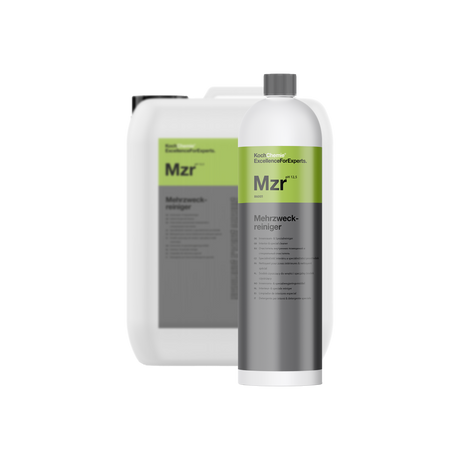
This combination has a tangible chemical background. Hard wax creates a somewhat rough, but thick and UV-stable base layer. A modern polymer or ceramic spray sealant fills the microstructure of this wax layer, making it more hydrophobic, smoother, and cleaner for longer. The Koch-Chemie Protector-Wax Pw is a special case in this setup. It is applied as a concentrate in a spray bottle or foam cannon after each wash, creating a wet sealant with a lotus effect that builds up in layers and does not attack the hard wax substrate.
If you don't need the full build-up, a good spray sealant alone will serve you well. A frequently washed daily driver benefits little from maximum hard wax protection if it's polished twice a year anyway. The Paint Sealant Overview in the Detailing101 blog shows when the effort is worthwhile and when it is not.
In workshop practice, a simple three-step rhythm has become established. In spring, you apply the hard wax; in mid-summer, you apply a spray sealant over it; before winter, a second spray refresh follows as salt and grit protection. Those who follow this will have continuously recognizable beading for twelve months and avoid the annoying weeks when the paint looks dull because the old protective film has worn off and the new one has not yet been applied.
Where Each Product Has Its Limits
Spray sealant has clearly defined weaknesses that become particularly visible in workshop practice when preparation is neglected. It adheres poorly to heavily contaminated paint – iron particles, tar spots, or stubborn brake dust must be removed beforehand, otherwise the polymer network will bond to the dirt instead of the clear coat.
Furthermore, the layer is thin. If you run through a brush car wash marathon between applications, you won't see any beading after three instead of four months. In summer, at paint temperatures above 35 degrees, a spray sealant is harder to spread evenly because it dries too quickly and can leave streaks.
Hard wax has different limits. Poor application immediately takes its toll. Layers that are too thick are difficult to buff off, leave an uneven reflection, and require a second pass with a quick detailer to even out wipe marks. On rough polished paints, an insufficiently cured wax can create streaks that look like wipe patterns in the right light. Hard wax is also not indestructible – road salt, alkaline cleaners with a pH above 12, and a harsh brush car wash significantly shorten its durability.
Both products are not a substitute for paint polishing. If you have swirls, holograms, or minor scratches, neither spray nor wax will remove them. Care layers preserve the condition; they do not repair.
An honest limitation of both worlds concerns the promises on the packaging. Twelve months of durability means twelve months of protective effect under ideal conditions – a garage, few brush car washes, regular maintenance washes, no road salt. In real German everyday life with outdoor parking, a brush car wash every two weeks, and damp winter months, six to eight months of protection is what twelve promise. This is not a weakness of the products but a correction of expectations – and the reason why every reputable detailer prefers to renew the sealant too early rather than too late.

Which Product for Which Car and Which Care Routine
If you have a daily driver or commuter car that goes through the brush car wash every week, a pure spray sealant is the right choice. You add ten minutes of extra work, save yourself the effort of hard wax, and accept that the beading needs to be renewed after three months. The spray sealant selection in the shop shows the suitable candidates – preferably with a polymer or Si-Carbon base.
If you have dark paint and value the deep, warm shine, you are better off with a classic or synthetic hard wax. Paste or liquid wax once per season, with a quick detailer in between for aesthetics – that's the care routine that visibly distinguishes paint surfaces from standard washes. A can of Meguiar's Ultimate Paste Wax is sufficient for six to eight complete car applications, which is a supply for three to four seasons.
If you have a weekend car or collector's car that is driven little and rarely washed, the combination strategy wins. Hard wax once in spring, plus a spray sealant after each wash – this combination provides twelve months of high-level protection with minimal ongoing effort. If you regularly go to the car wash and don't feel like workshop routines, stick to a good spray sealant – it's the pragmatic compromise between protection and effort.
And if you're completely unsure, start with the simplest setup. A bottle of modern spray sealant, a high-quality microfiber cloth, a clean wash in May – done. If the beading is as desired after two or three applications, you have no reason for a classic hard wax.
If you want the next step, you can always apply a paste or liquid wax layer the following spring – the order does no harm; the protection simply builds up. The Winter Wash Guide in the Detailing101 blog shows the appropriate preparation workflow for the first May application.

Detailing1-Insight: In the workshop, we see the classic mistake daily. Customers bring a car that has been maintained with spray sealant over three wax layers and wonder why there's no beading after three months. The reason is almost always the same – the paint surface was not clean enough before the wax was applied. If you make the leap and want to re-seal in May or June, first invest half an hour in iron decontamination and a foam pre-wash. On a truly clean surface, three simple spray sealants are enough for a full summer of protection without having to resort to hard wax. The paint is not to blame; the care procedure is.
No time for the whole post? Get it summarized: