















Microfibre cloth for your car: more GSM is not better
Daniel von Detailing1 |


Koch-Chemie Magic Wheel Cleaner "Mwc" Wheel Cleaner - 2x 500ml is on backorder. As soon as everything in your order is back in stock, we ship it all in one go — delivery time follows whichever item takes longest.
— Hurry up while stocks last, delivery time 1-4 days
Item added to your cart.
View cart
| Koch-ChemieMagic Wheel Cleaner "Mwc" Wheel Cleaner 500 ml In stock (8 units)
|
14,84€
Inhalt: 500mlUnit price (29,68€
/ l)
Unavailable
|
||
| Koch-ChemieMagic Wheel Cleaner "Mwc" Wheel Cleaner 2x 500ml Low stock (4 units)
|
32,32€
Inhalt: 1000mlUnit price (32,32€
/ l)
Unavailable
|
||
| Koch-ChemieMagic Wheel Cleaner "Mwc" Wheel Cleaner 3x 500ml In stock (2 units)
|
47,98€
Inhalt: 1500mlUnit price (31,99€
/ l)
Unavailable
|
||
| Koch-ChemieMagic Wheel Cleaner "Mwc" Wheel Cleaner 10 liters Backordered (2 units)
|
135,84€
Inhalt: 10lUnit price (13,58€
/ l)
Unavailable
|
Do you have any questions or need help?
We are sure that our help page will help you. There you will find information on how to contact us and the relevant answers to frequently asked questions.
Didn't find what you were looking for? Write us a message in the chat.
Shipping to Italy from 8,90 € with FedEx, DPD or SDA, delivery time 1-4 days.
All shipping methods, weight tiers and express options are listed in our shipping policy.
Car Care Store in Nordhorn
Why wait when you can get it fast? Order your car care products from us online and choose between convenient pickup or our lightning-fast delivery, whether locally or throughout Europe. We are dedicated to offering you maximum flexibility and convenience so your car always stays in top condition.
You can always pick up your order from Tuesday to Friday, 10:00 to 17:00, at Bosinks Kamp 8 in 48531 Nordhorn at Detailing1. Please have your pickup confirmation ready. We look forward to your visit.
Couldn't load pickup availability
What is the Koch-Chemie Magic Wheel Cleaner? An acid-free, viscous wheel cleaner from Koch-Chemie's workshop line that visibly dissolves brake dust and flash rust chemically via a red-violet colour change. Works on alloy painted, alloy polished, chrome and steel. Not for baked-on tar or bitumen spots.
The Koch-Chemie Magic Wheel Cleaner — usually just called "MWC" in-house — is an acid-free wheel cleaner from Koch-Chemie's workshop line. The active ingredient ammonium mercaptoacetate, a salt of thioglycolic acid, reacts with the iron(III) compounds in brake dust and lifts them off the wheel surface as a red-violet complex. The colour change isn't a marketing gimmick but the chemical reaction itself: where you see violet, iron is being converted right then and there. With a pH of 5–6 the formula stays gentle on painted and polished alloy wheels, chrome and steel. The high viscosity of 50 mPa·s means the product clings to vertical wheel faces instead of running straight off — so you get the full dwell time on the surface.
Day-to-day from Detailing1: Always spray onto a cold, dry wheel — never in direct sun, never onto warm brakes after a drive. Warm surfaces let the gel dry on, and that leaves residue you then have to brush off. On heavily soiled wheels after months without cleaning, two short passes beat one long one: the active ingredient is chemically saturated after about 5 minutes. Just let it dwell twice for 3 minutes each and rinse in between.
Spray the Magic Wheel Cleaner onto the cold, dry wheel — cover spokes, barrel, the rim edge and the wheel bolts evenly. Thanks to the syrup-like consistency the product clings vertically without you having to change how you work. Best to work bottom to top so you don't cover faces you've already wetted.
After 30 to 60 seconds the colour change kicks in: first on spots with a lot of brake dust, then across the whole face. Red-violet streaks show you exactly where iron particles are being converted. After 2 to 5 minutes' dwell time the reaction is done — waiting longer gets you nothing, because the active ingredient is saturated after about 5 minutes. A common mistake is leaving the product on for 10 minutes hoping for better results. The opposite happens: the solution starts to dry on and leaves streaks.
Finish by rinsing off with a strong jet of water from the pressure washer or garden hose, top to bottom. With heavy brake dust between tight spokes a wheel brush can help spread the dissolved material — but not for scrubbing, just for touch-up. If you clean weekly to fortnightly, one pass usually does the job.
A note on dosing: 500 ml lasts for about 10 full vehicle cleans. Per wheel, 40 to 50 ml is plenty. That works out to EUR 1.25 per full application — far more economical than the bottle price suggests, once you weigh it against the time spent mechanically scrubbing with less effective cleaners.
The Magic Wheel Cleaner is built precisely for one job: dissolving brake dust and flash rust chemically. The reaction between ammonium mercaptoacetate and the iron(III) ions in brake dust is the mechanism — anything that isn't iron doesn't get touched. That explains the colour change as a diagnostic tool: no colour means no iron, and no effect in that case isn't a shortfall of the product but the right answer to the dirt.
As a secondary use, the Magic Wheel Cleaner also works on paint as a flash-rust remover — especially handy on vehicles parked under industrial fallout or next to railway tracks. Fine iron particles settle there on the clear coat and react with the MWC formula just like they do on the wheel. Used before polishing, it boosts the adhesion of any following wax or ceramic coating, because the paint surface is genuinely contamination-free.
Where the MWC isn't the right product: baked-on tar, bitumen spots and oily soiling don't react with thioglycolate salts. For that you need a solvent-based tar remover. On badly neglected wheels with months-old brake dust that has worked its way into the pores, the stronger Koch-Chemie Reactive Wheel Cleaner can be the better call — its acid system is more powerful, though not suited to every wheel material. The choice is clear: when safety on chrome and polished wheels matters, MWC. When you need maximum cleaning power and you're working with alloy painted and steel, RWC.
A second case where no wheel cleaner in the world will help anymore: when the wheel is already visibly corroded or the clear coat has flaked off. At that point cleaning isn't the issue anymore — paint refurbishment is. The Magic Wheel Cleaner is a care product, not a restoration product.
The Magic Wheel Cleaner is the right call for anyone who keeps their wheels on a regular schedule and wants a product where they don't have to think about material compatibility. One product, one step, all wheels done. That's workshop logic — and that's exactly what the MWC is formulated for.
It really plays its strengths when you look after several vehicles with different wheel types or work on a fleet. Instead of three cleaners for three wheel types, one does it. It's weaker on extremely baked-on brake-dust residue from high-performance brake setups, or on wheels that haven't been cleaned for months. In both cases a second pass or a more aggressive product makes more sense than extending the dwell time.
As a complete solution the Magic Wheel Cleaner works best paired with a pre-cleaner like Koch-Chemie Vorreiniger B, applied as foam over the whole wheel before the MWC goes into the spokes. Finish with a tyre dressing on the flank — and the complete wheel workflow comes in at around 15 minutes per vehicle, if you stay on it every two weeks. That's the most common combo our customers buy: Vorreiniger B + Magic Wheel Cleaner. A precise, repeatable routine that works without scrubbing.
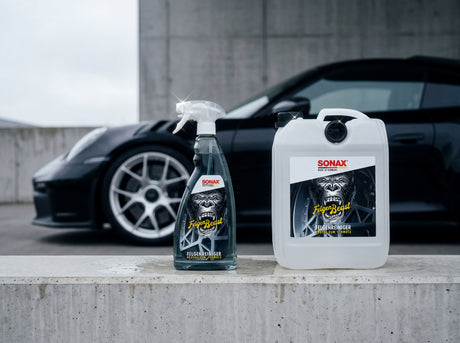
Head to head with the acid-free classic SONAX FelgenBeast, the Magic Wheel Cleaner comes out ahead on two counts: the higher viscosity means longer contact time on the wheel, and the workshop formula is dosed stronger for commercial use. The FelgenBeast has a milder smell, though — if you work in a closed garage you'll definitely notice that. The Magic Wheel Cleaner is the workshop standard. The FelgenBeast is the garage all-rounder. Both do their job reliably; the question is which one fits your working environment.
Not sure about Koch-Chemie Magic Wheel Cleaner "Mwc" Wheel Cleaner? Get it explained:
The Magic Wheel Cleaner, internally called "MWC", is an acid-free wheel cleaner from Koch-Chemie's workshop line. The active ingredient, ammonium mercaptoacetate, reacts with iron(III) compounds in brake dust and removes them from the wheel surface as a red-violet complex. The color change is not a dye but a direct chemical reaction. It is material-compatible with polished aluminum, painted aluminum, chrome, and steel at a pH value of 5 to 6.
Spray evenly onto cold, dry rims from a distance of about 20 cm – include spokes, wheel well, rim flange, and wheel bolts. Allow to act for 2 to 5 minutes. After about 30 seconds, the red-violet color change begins. Then rinse off with a strong jet of water from top to bottom. For narrow spokes, use a wheel brush only for spreading, not for scrubbing.
Magic Wheel Cleaner is acid-free and suitable for all common rim materials, including polished aluminum and chrome. The Koch-Chemie Reactive Wheel Cleaner contains acid and is more powerful for burnt-in brake dust, but not recommended for polished aluminum or chrome. The decision criterion is the rim material: polished aluminum or existing chrome → MWC. Painted aluminum or steel with extreme contamination → RWC.
Yes, that is one of the product's strengths. The pH of 5 to 6 and the acid-free formula are material-compatible with chrome, polished aluminum, and painted aluminum. For anodized or matte coated rims, test in an inconspicuous area beforehand – some coatings can react sensitively there. On magnesium forged wheels of modern Porsche and AMG lines, MWC is the workshop standard.
The active ingredient is chemically saturated after about 5 minutes – a longer exposure time does not lead to better cleaning. What happens instead: the gel starts to dry out and leaves streaks that you will have to remove mechanically. In the sun or on warm rims, drying accelerates significantly. Therefore: for heavily soiled rims, it is better to apply twice for 2 to 3 minutes than once for 10 minutes.
A 500 ml bottle is sufficient for about 10 complete vehicle cleanings with a normal degree of contamination. 40 to 50 ml of product are needed per wheel, depending on spoke geometry and rim size. With a bi-weekly rhythm, one bottle lasts about 5 months. The cost per complete application is approximately 1.25 Euros. For continuous use in the workshop, MWC is also available as a 10-liter canister.
The Magic Wheel Cleaner works best when the rim is cold and dry and coarse road grime has been removed beforehand. Park the vehicle in the shade and let warm brakes cool down for at least 15 minutes — a quick palm test is sufficient: if the rim feels hot, it's too warm. Rinse off loose dirt with a high-pressure cleaner or garden hose and let the rim dry again. Even more efficient is a foam pre-cleaner like Koch-Chemie Vorreiniger B, which removes coarse road film before the MWC gets into the spokes.
For each wheel, 40 to 50 ml of product is sufficient. Spray the Magic Wheel Cleaner evenly over the entire rim — including spokes, rim bed, horn rim, and wheel bolts. Work from bottom to top to avoid overlapping already wet areas. Due to its syrup-like viscosity of 50 mPa·s, the gel adheres to vertical rim surfaces instead of running off immediately — thus fully utilizing the dwell time.
After 30 to 60 seconds, the red-violet color change begins in areas with a lot of brake dust, then spreads across the surface. The total dwell time is 2 to 5 minutes, no longer. The active ingredient is chemically saturated after about 5 minutes — further waiting brings no improvement, only the risk of residues drying. For heavily soiled rims after a long break, two short applications of 2 to 3 minutes each work significantly better than a single long application.
Finally, rinse with a strong jet of water from top to bottom until the water runs clear. A wheel brush helps in tight spokes — but only to distribute the dissolved material, not to scrub. The chemical reaction has already done the main work. If any color change residues are still visible after rinsing, apply a second short pass. Finish with a tire dressing on the sidewall — then the complete wheel workflow is about 15 minutes per vehicle.
Notes: Never spray on warm or hot rims and never in direct sunlight — the gel dries and leaves streaks. The product only works on iron components: baked-on tar, bitumen stains, and oily dirt are not affected; a solvent-based tar remover is needed for these. On anodized or matte coated rims, test in an inconspicuous area first. Store cool, dry, and tightly closed between 5 and 25 °C, out of reach of children and away from food.
Hinweise für Koch-Chemie Magic Wheel Cleaner "Mwc" Wheel Cleaner
Privatkundenkonform
Das hier als „Privatkundenkonform“ gekennzeichnete Produkt ist nach deutscher Gesetzgebung privatkundenkonform verpackt, deklariert, angemeldet und zertifiziert. Beachte bitte die Gefahren- und Sicherheitshinweise.
Materialzusammensetzung
Ammonium mercaptoacetate (CAS 5421-46-5, EC 226-540-9) — 10- < 30 %, 1-Propanaminium, 3-amino-N-(carboxymethyl)-N,N-dimethyl-, N- C8-18(even numbered)-acyl derivatives, hydroxides, inner salts (CAS 97862-59-4, EC 931-296-8) — 10- < 25 %, D-Glucopyranose, oligomeric, C10-16(even numbered)-alkyl glycosides (CAS 110615-47-9, EC 600-975-8) — 1- < 2.5 %, Reaction mass of 2-ethylhexyl mono-D-glucopyranoside and 2-ethylhexyl di-D-glucopyranoside (CAS (108081-06-7), EC 414-420-0, Index 614-028-00-1) — 0.3- < 2.5 %, and alpha-Hexyl cinnamaldehyde (CAS 101-86-0, EC 202-983-3) — 0.01- < 1 %Achtung

Gesundheitsschädlich

Verätzungsgefahr
| Gesundheitsschädlich bei Verschlucken. | H302 |
| Kann allergische Hautreaktionen verursachen. | H317 |
| Verursacht schwere Augenschäden. | H318 |
| Schädlich für Wasserorganismen, mit langfristiger Wirkung. | H412 |
| Ist ärztlicher Rat erforderlich, Verpackung oder Kennzeichnungsetikett bereithalten. | P101 |
| Darf nicht in die Hände von Kindern gelangen. | P102 |
| Einatmen von Staub/Rauch/Gas/Nebel/Dampf/Aerosol vermeiden. | P261 |
| Freisetzung in die Umwelt vermeiden. | P273 |
| Schutzhandschuhe/Schutzkleidung/Augenschutz/Gesichtsschutz tragen. | P280 |
| BEI KONTAKT MIT DEN AUGEN: Einige Minuten lang behutsam mit Wasser ausspülen. Eventuell vorhandene Kontaktlinsen nach Möglichkeit entfernen. Weiter ausspülen. | P305+P351+P338 |
| Sofort GIFTINFORMATIONSZENTRUM/Arzt anrufen. | P310 |
| Eventuell vorhandene Kontaktlinsen nach Möglichkeit entfernen. Weiter ausspülen. | P338 |
| Inhalt/Behälter einer zugelassenen Entsorgungseinrichtung zuführen. | P501 |
Downloads
Sicherheitsdatenblatt herunterladen
Diese Produktinformation soll und können dich nur unverbindlich beraten. Eine Haftung unsererseits kann hieraus nicht abgeleitet werden. Prüfe bitte, ob das Produkt für deinen Anwendungsfall geeignet ist. Vor der Anwendung auf Eignung und Verträglichkeit prüfen. Zur Beratung stehen wir Dir gerne zur Verfügung.
Fragen zu den Hinweisen?
Contact
Koch‑Chemie GmbH
Einsteinstr. 42, 59423 Unna, Deutschland
+492303986700
info@koch-chemie.com
koch-chemie.com
Choose from many payment methods such as PayPal, Klarna, Apple Pay, Mastercard or Visa and benefit from pay later and instalment options. Your payment details are always processed securely. Questions about payment?

Your order reaches you from 8,90 € in 1-4 days with FedEx, DPD or SDA. Questions about shipping?

Koch-Chemie
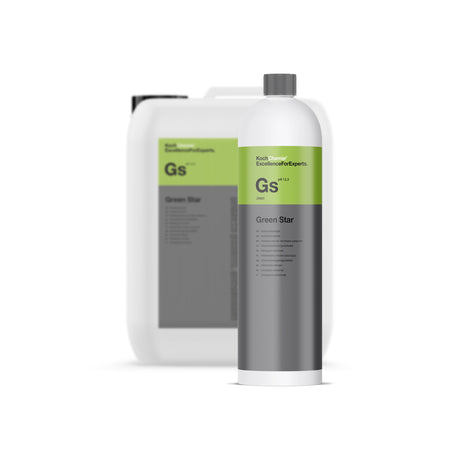
Green Star "Gs" Universal Cleaner
Hochalkalischer APC-Konzentrat für Werkstatt, Motorraum und Hebebühne


Koch-Chemie
Spray Head "Star" (28/400) CHS-3AN by Canyon
Chemical spray head for 28/400 bottles with stepless nozzle
Koch-Chemie
Top Star "Ts" Interior Plastic Care
Silicone-free Plastic Care with UV Protection and Silk-Matte Finish
Koch-Chemie
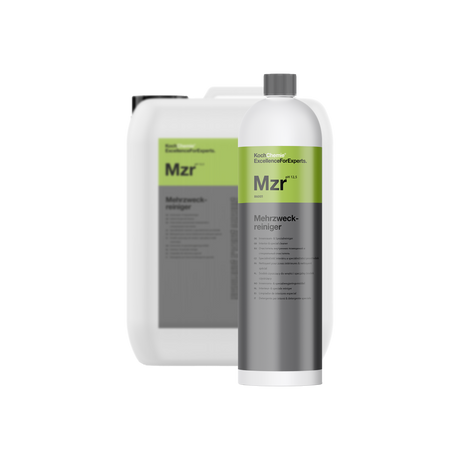
Multi-Purpose Cleaner "Mzr" All-Purpose Cleaner
Alkaline cleaner concentrate with pH 12.5 and Daimler approval
Koch-Chemie
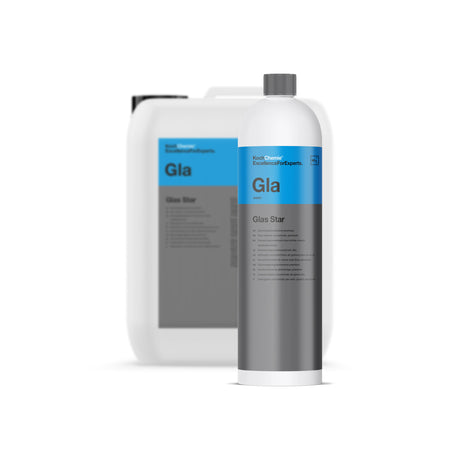
Glas Star "Gla" Glass Cleaner Concentrate
Concentrated alcohol-based glass cleaner with Daimler approval
Koch-Chemie
Cleans thoroughly and gently, preserves the shine of the paint surface
Koch-Chemie
Leather Star "Ls" Leather Care
Ready-to-use leather care emulsion with active UV blockers
Koch-Chemie
Reactive Rust Remover "Rrr" iron fallout remover
Maximum cleaning performance for flawless results without compromise
Koch-Chemie
Teerwäsche A "Tea" Bitumen & Tar Remover
Perfect bitumen and tar removers for a flawless finish
Koch-Chemie
Gummifix "Guf" rubber and plastic care
Silicone-free rubber and plastic care for non-slip floor mats


Koch-Chemie
Magic Wheel Cleaner "Mwc" Wheel Cleaner
Acid-free wheel cleaner with color change for daily workshop use
Koch-Chemie
Magic Wheel Cleaner "Mwc" Wheel Cleaner
Acid-free wheel cleaner with color change for daily workshop use
SONAX
Acid-free wheel cleaner with color change for all rim types
Koch-Chemie
Felgenreiniger extrem "Fe" wheel cleaner
Salzsäurebasierter Profi-Felgenreiniger für eingebrannten Bremsstaub
TUGA Chemie
Alu-Teufel "Spezial"® (Green) Wheel Cleaner
pH-neutral wheel cleaner gel with active indicator for all rims


Koch-Chemie
"ReactiveWheelCleaner" Wheel Cleaner
Revolutionize rim care with this high-quality cleaner
Koch-Chemie
Alkali Wheel Cleaner "Awh" Wheel Cleaner (alkaline)
Powerful wheel cleaner for sparkling clean results
TUGA Chemie
Aluminium-Teufel® (Red) Wheel Cleaner
Acidic wheel cleaner for extremely baked-on brake dust
SONAX
Wheel Cleaner PLUS — color-changing, for all wheel types, TPMS
Koch-Chemie
Felgenblitz säurefrei "Fb" wheel cleaner
Effective acid-free wheel cleaner with color change
Koch-Chemie
Triple Acid Star "Ta" Wheel Cleaner
D-CON
"V4" Wheelcleaner & De-Ironizer Wheel Cleaner
Highly effective rim cleaner with lavender scent for all surfaces
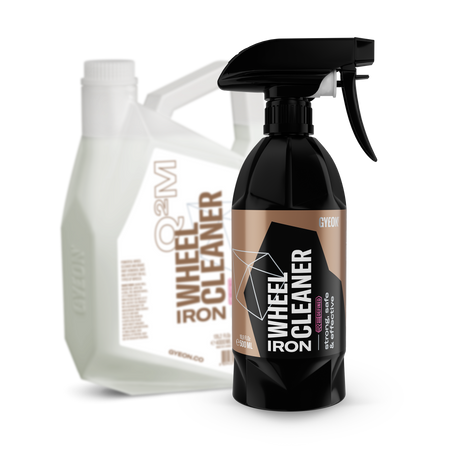


GYEON
Q²M Iron WheelCleaner (REDEFINED) Wheel Cleaner
Reactive Wheel Cleaner – Brake Dust & Rust Film Chemically Dissolved


Dr. Wack "P21S"
Maximum cleaning power for all rims


Meguiars
Safely remove brake dust & road grime — no scrubbing


Soft99
Soft99 Iron Terminator Wheel Cleaner
Innovative rim cleaner for deep cleaning
Koch-Chemie × THE FINISHER
THE FINISHER "WheelKing" Wheel Cleaner
Powerful acid-free wheel cleaner with shine and beading effect
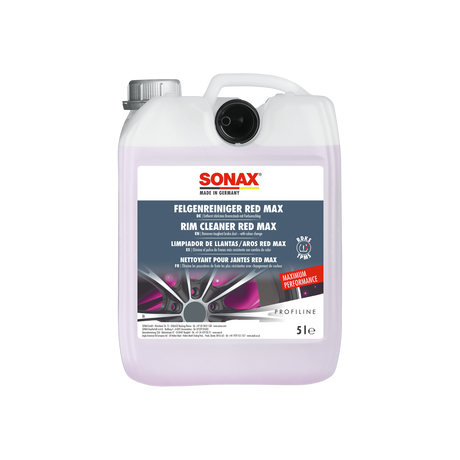
SONAX
PROFILINE FelgenReiniger Red Max wheel cleaner
Wheel Cleaner Red Max — Acidic Professional Wheel Cleaner


Soft99
Digloss Kamitore Wheel and Tire Cleaner Felgenreiniger
Wheel cleaner that deeply cleans and protects.
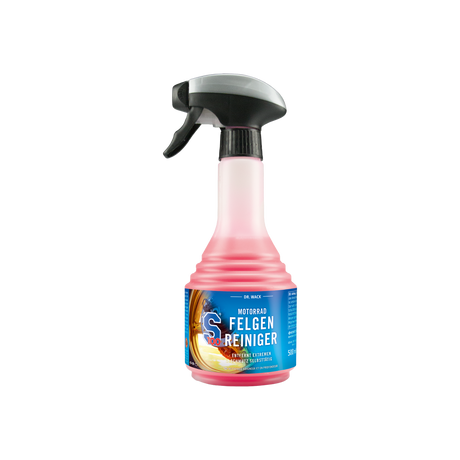
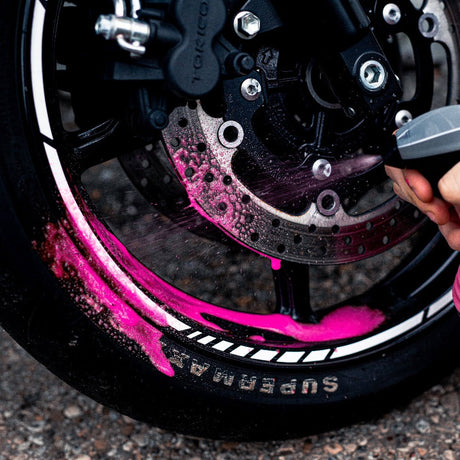
Dr. Wack "S100"
"S100" Motorcycle Wheel Cleaner for Motorbikes
Effective wheel cleaner for sparkling clean motorcycle wheels

Meguiars
Ultimate Waterless "Wheel and Tire" Dry Wash Detailer
Waterless rim cleaning and tire care in one product
NAP Care
NAP Care "RIM-CLEAN" Wheel Gel Cleaner and Iron Fallout Remover
Effective wheel cleaner for shiny and clean rims
NIGRIN
Säurefreies Felgenreiniger-Gel mit Farbumschlag für alle Felgentypen
TUGA Chemie
Biker's Felgen-Teufel® wheel cleaner for "motorcycles"
Acid-Free Motorcycle Wheel Cleaner with Chelating Agent Indicator
Daniel von Detailing1 |

Daniel von Detailing1 |

Jasper von Detailing1 |

Daniel von Detailing1 |

Daniel von Detailing1 |

Daniel von Detailing1 |

Daniel von Detailing1 |

Jasper von Detailing1 |

Daniel von Detailing1 |

Daniel von Detailing1 |

Daniel von Detailing1 |

Daniel von Detailing1 |